| | | Editorial
Dear reader,
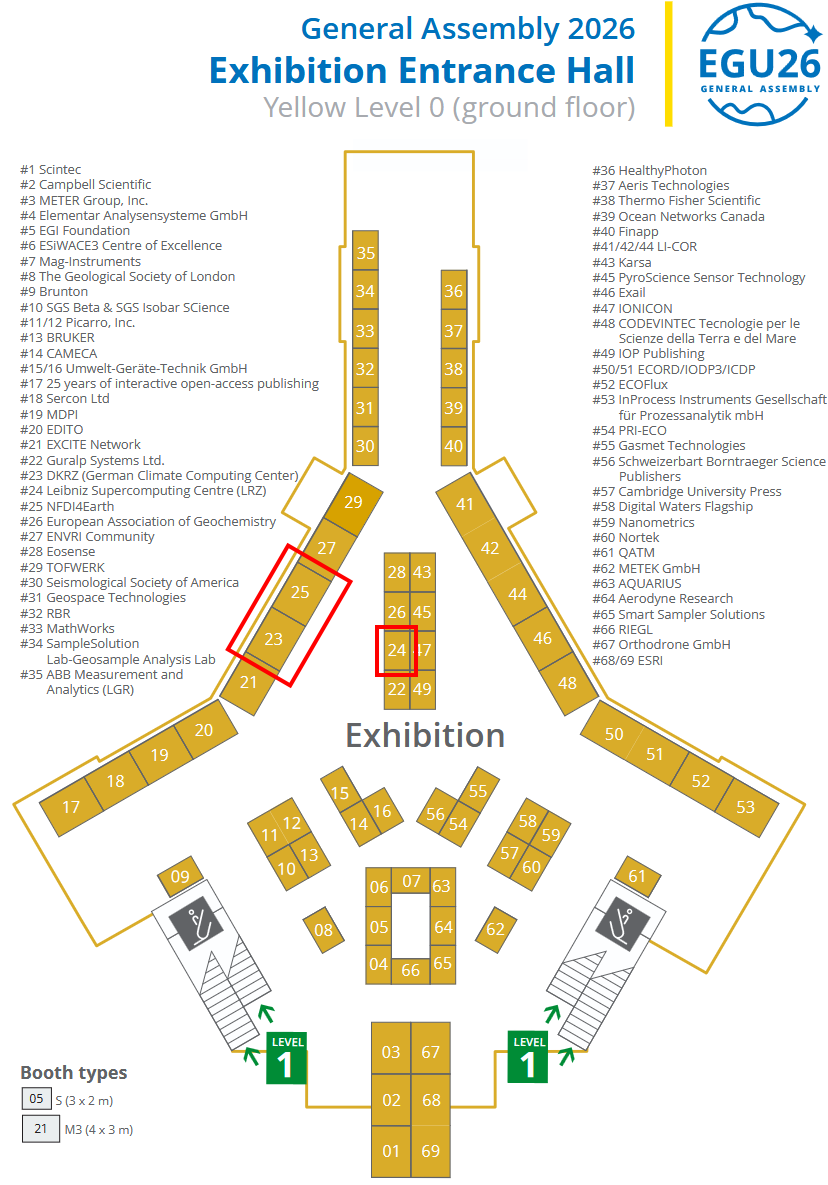
spring marks the start of a busy season for NFDI4Earth, and this issue is a bit puts two milestone events front and centre. First, we will once again be at the General Assembly of the European Geosciences Union in Vienna from 3 to 8 May 2026. After two great years at EGU, we are looking forward to welcoming you at booth #25 close to our partners DKRZ and LRZ. Expect a lively daily booth programme, contributions across many sessions, and our townhall on shaping the European Open Science Cloud.
Just a few weeks later we invite you back to our 5th NFDI4Earth Plenary taking place from 27 to 29 May 2026, again, at Deutsches Hygiene-Museum Dresden — three days of workshops, hands-on sessions, talks, in- and external impulses, a software marketplace and a postersession as well as plenty of room to connect and to network as we head into the final stretch of our initialisation phase and get ready for the future of the NFDI.
Beyond these two highlights, this issue offers a glimpse of where else we have been recently: from Love Data Week at SLUB Dresden and the CDRmare General Assembly to RDA-DE in Potsdam, the DGG annual meeting in Münster, the Hydrology Day in Kassel, and the EPOS Days 2026. With the renewal proposal behind us, we are stepping up our outreach — so expect to see more of us at your own community and society meetings, too. If you would like us to join yours, please get in touch.
Remember that our newsletter functions as an information hub based on your articles - please contribute! The newsletter is published quarterly and the next deadline for submissions is 15 June 2026 - see the NFDI4Earth website for further details.
And now enjoy reading!
The NFDI4Earth Newsletter Team
| |
|
| | | Meet us here NFDI4Earth @ EGU26 NFDI4Earth Plenary 2026
Spot on... NFDI4Earth Are you still publishing your data on Zenodo? Discover better-suited repositories with the OneStop4All! Advancing FAIR Metadata: White Paper Updated Pilots and Incubators Showcases of Earth System Sciences
NFDI4Earth Outcomes NFDI4Earth Helpdesk: Question of the Quarter NFDI4Earth at SLUB Dresden for Love Data Week 2026 Reaching out to scientists from CDRmare NFDI4Earth @ RDA-DE 2026 NFDI4Earth at 86th Annual Meeting of the DGG NFDI4Earth @ Hydrology Day NFDI4Earth at EPOS Days 2026
News from the RDM & Earth System Science Community ELMO: Simplifying FAIR metadata creation in geosciences
International News EQUIP-G: European Quantum Infrastructure Project for Gravimetry (workshop & open-call) | |
| |
|
| | After the great interest over the last two years, NFDI4Earth will again join the General Assembly of the European Geosciences Union (EGU) from 3 to 8 May 2026 at Vienna.
NFDI4Earth welcomes researchers at its booth #25 in the entrance hall, where daily talks will be held during the conference breaks, such as community activities, the user support network, signing the NFDI4Earth Commitment, and our services as well as about the work of our partners.
The booth is jointly organised with our partners, the German Climate Computing Center (DKRZ) at booth #23 and the Leibniz Supercomputing Center Munich at booth #24.
Many colleagues from NFDI4Earth and our community are involved in various sessions and events of the EGU GA - a list of these, along with our booth programme, can be found here.
|
| |
|---|
NFDI4Earth will be presented at EPOS ERIC booth #113 / 114 / 115 on Wednesday, 6 May 2026, and on Data Terra booth #129 on Thursday, 7 May 2026, during the lunch breaks.
We would like to draw your attention and especially invite you to the Townhall Meeting: Joining Forces in shaping the European Open Science Cloud. This meeting is co-organized with Data Terra, France, and takes place on Wednesday, 6 May 2026, from 19:00 to 20:00 (CEST) in room N2.
We look forward to meeting you at EGU in Vienna and esp. our boothes for data, drinks and dialogue!
Christin Henzen & Jörg Seegert (TU Dresden)
| | NFDI4Earth Plenary 2026 | |
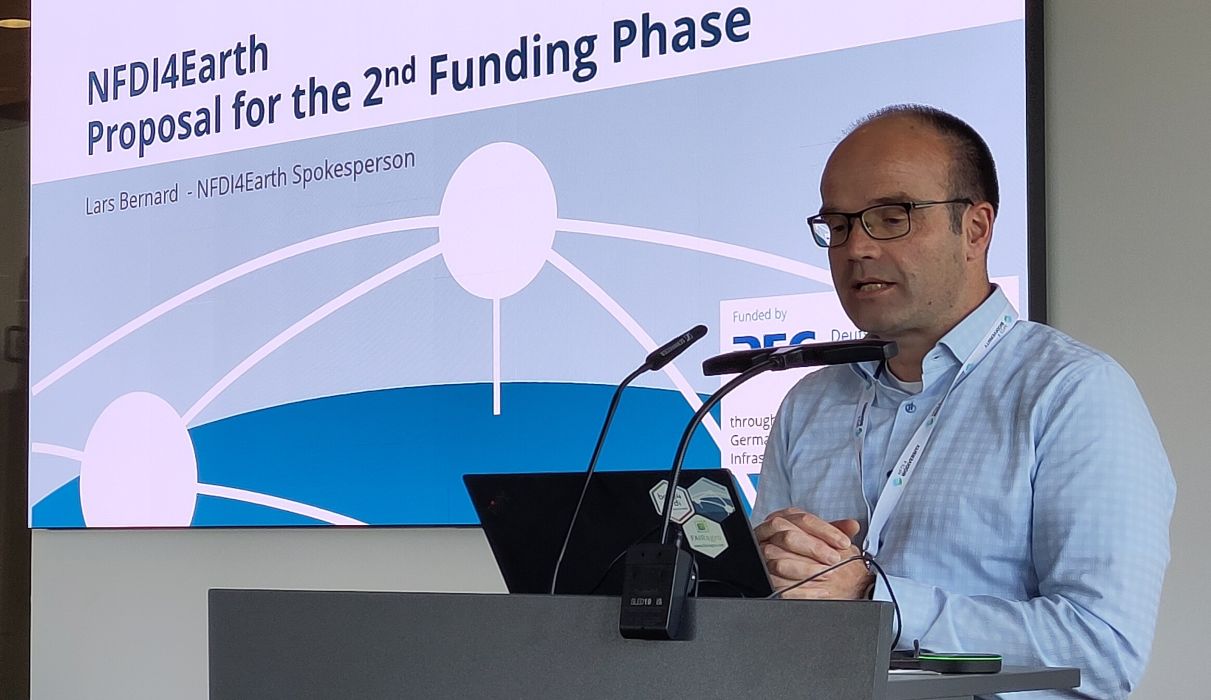
Lars Bernard (TU Dresden), NFDI4Earth Spokeperson at Plenary 2025. Photo credit: Shanice Allerheiligen | Please save the date for our 5th NFDI4Earth Plenary taking place from 27 to 29 May 2026 at the Deutsches Hygiene-Museum Dresden (Lingnerplatz 1, Dresden). The plenary will begin on Wednesday, 27 May 2026, with side events and various workshops. The following days, Thursday and Friday, will feature talks, hands-on sessions, workshops, in- and external impulses, a software marketplace and a postersession as well as plenty of room to connect and to network.
Further details about the Plenary, including the programme and schedule are available on the NFDI4Earth website.
We look forward to welcoming you back to Dresden at the end of May 2026!
The NFDI4Earth Coordination Office (TU Dresden)
| |
| | Are you still publishing your data on Zenodo? Discover better-suited repositories with the OneStop4All!
| |
Many researchers choose Zenodo because it quickly provides a digital object identifier (DOI), requires only minimal metadata, and allows publication within minutes, without lengthy curation processes. While convenient, this approach can limit the visibility and reusability of your data. Without proper curation and disciplinary context, e.g., discipline-specific metadata, your datasets may be harder for other researchers to find, understand, and reuse effectively.
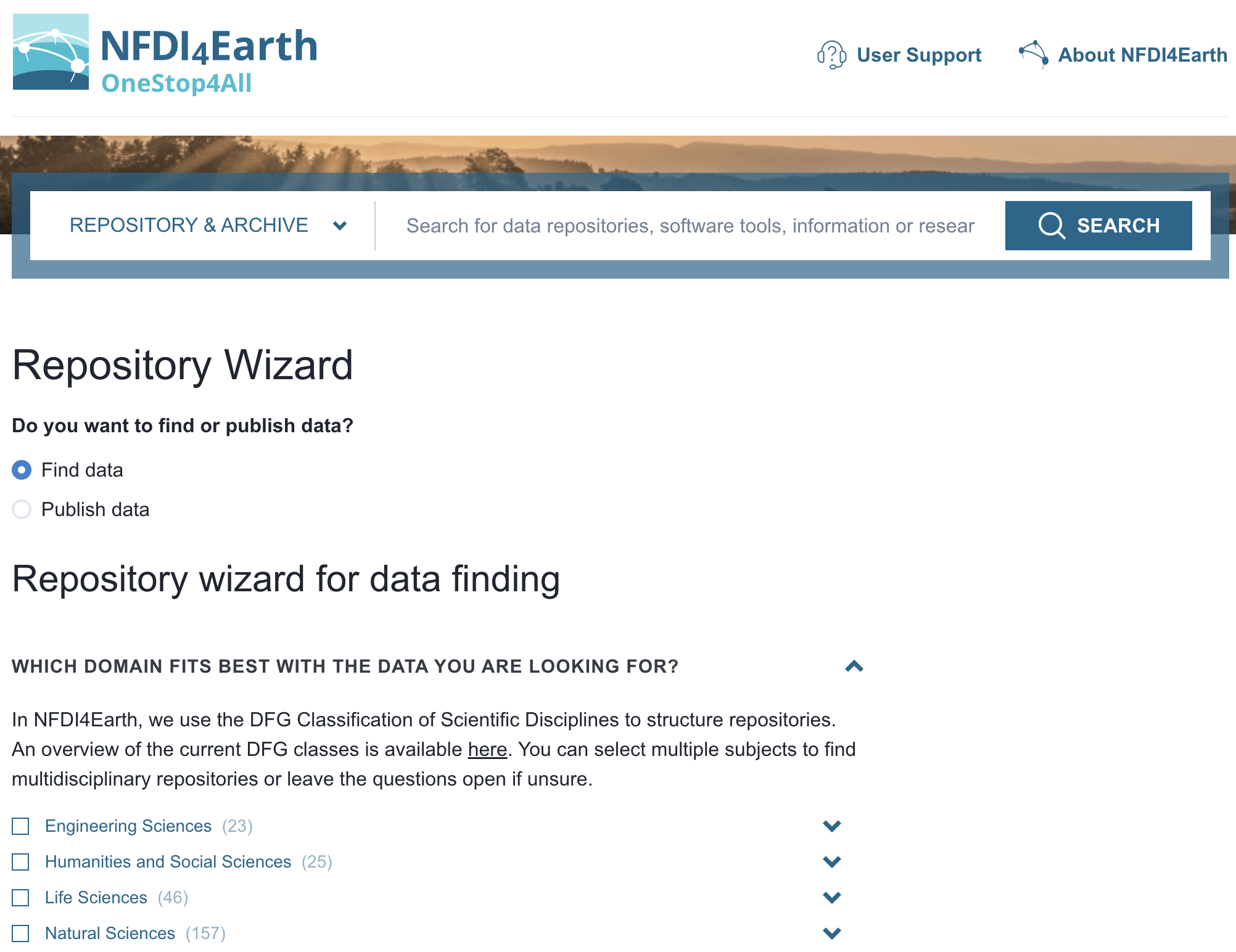
Our OneStop4All helps you find the most suitable repository for your research data. It offers access to information from more than 200 disciplinary repositories, systematically harvested from re3data as a key partner and trusted data source in our infrastructure network, and manually curated where data is missing. Nearly half of these are operated by NFDI4Earth partners; about a dozen carry the NFDI4Earth label, and are harvested through the Knowledge Hub.
To make your search easier, we provide a guided repository finder. Instead of manually browsing countless options, you can filter repositories based on: subject area, data type, requirements such as DOI availability, and country. Already published your data according to FAIR principles? We would be happy to feature your work as a showcase.
Tom Niers (TU Dresden), Markus Konkol (52°North GmbH) Christin Henzen (TU Dresden) on behalf of the OneStop4All team
| | Advancing FAIR Metadata: White Paper Updated
| Metadata remains a critical task in the NFDI4Earth work programme, especially as modern AI solutions increasingly rely on well-curated metadata. This is achieved through a joint effort among providers and aggregators of metadata. Our white paper, “Recommendations for Earth System Sciences Metadata Provision,” consolidates contributions from several stakeholders to establish shared recommendations and implementations.
With its latest version, the white paper continues to guide the implementation of interoperable, FAIR-aligned metadata practices in Earth System Sciences, including a structured approach to metadata provision and best practices for repository providers. New sections address alignment with NFDI-wide metadata discussions, signposting and content negotiation, registration in re3data, and assessment via the NFDI4Earth Label.
The document remains a living resource and will be updated regularly as part of an ongoing, community-driven process. Researchers and practitioners are invited to review the current version and provide feedback to improve the recommendations further.
Robert Brylka (Senckenberg) & Christin Henzen (TU Dresden) on behalf of the authors
| | Pilots and Incubators Showcases of Earth System Sciences
| An event series “Pilots and Incubators: Showcases of Earth System Sciences, " took place on 19 and 26 February 2026. A total of eleven NFDI4Earth pilots and incubators presented their work and shared insights into their ongoing developments.
In the following, we would like to highlight three of these pilots, coordinted by University Leipzig, and three incubators, coordinated by the University Hannover. Although most pilots are still in their closure phase, they already demonstrate promising results and tangible outcomes.
In upcoming newsletters, we will continue to introduce the remaining projects.
Kolja Nenoff (University Leipzig) & Udo Feuerhake (Leibniz University Hannover)
| | | |
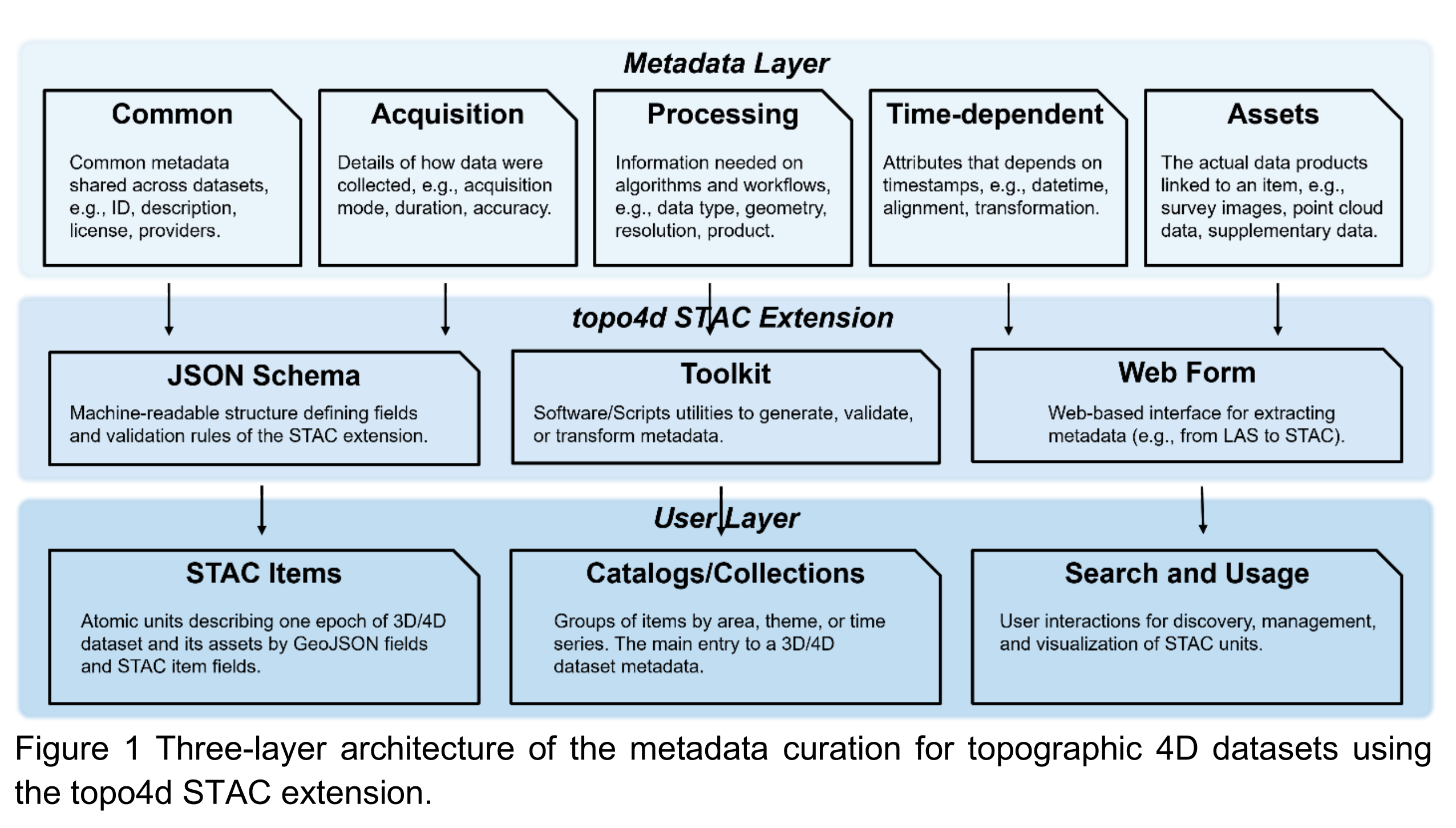
4D-Works develops standards and workflows for 3D time series (4D) geospatial data. The project focuses on metadata standardisation, interoperability, and FAIR data practices across the Earth system science domains.
The pilot has delivered substantial results. A STAC extension for 4D data (topo4d) was developed, enabling standardised, machine-readable metadata for multitemporal datasets. The framework captures time-dependent information such as acquisition parameters, alignment transformations, and processing details. Automated curation workflows and open-source tools are now available and have been demonstrated on real datasets.
A roadmap and demo are already published, supporting adoption by the wider community.
Jiapan Wang & Katharina Anders (TU Munich)
|
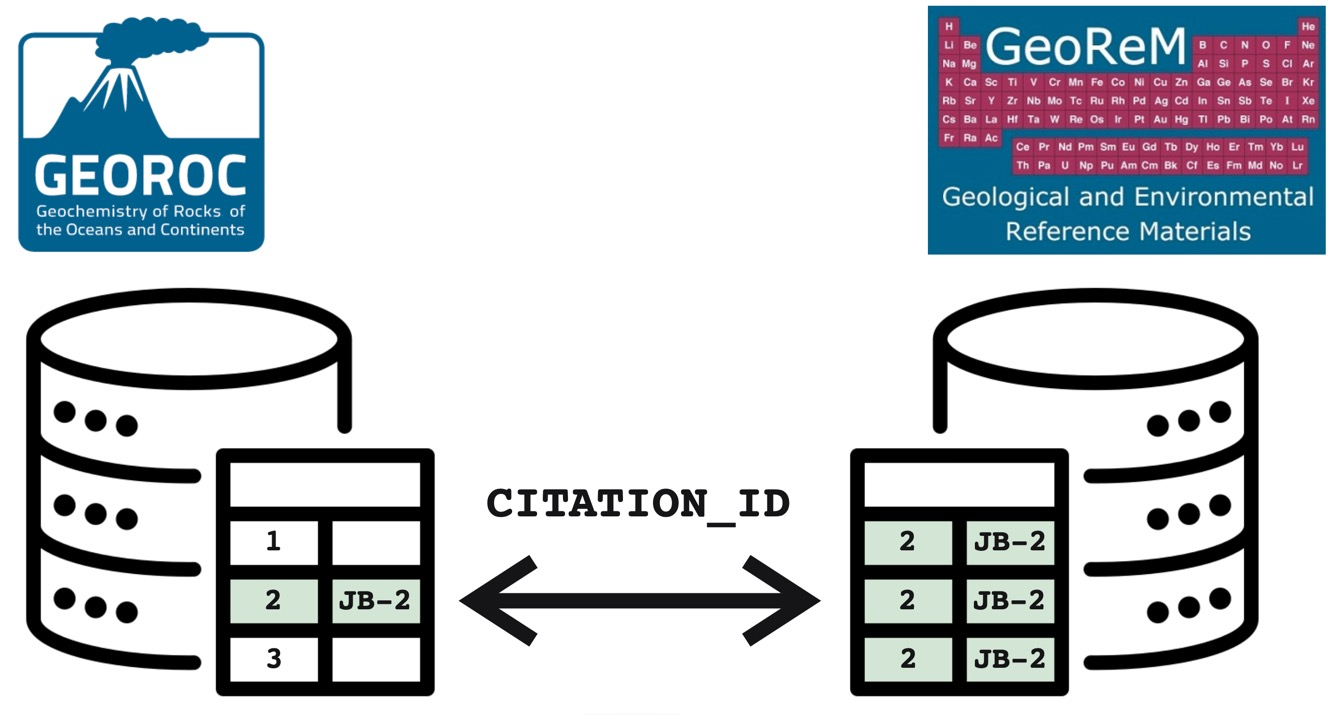
| An Adaptable Quality Evaluation Tool for Geochemical Data | | Combining GeoReM information with the GEOROC database enables the referencing of samples and supports integrated analysis.
| GeoRoc improves the integration and quality assessment of geochemical databases, particularly GEOROC and GeoReM. It addresses challenges in data comparability, metadata consistency, and analytical bias in geochemistry.
The pilot has achieved key integration results. GeoReM has been successfully integrated into GEOROC, enabling combined use of reference materials and analytical datasets. New data quality control tools were developed to detect inter-laboratory bias, outliers, and inconsistencies. These tools significantly enhance quality assurance, reusability, and findability of geochemical data. Initial applications already demonstrate the added value for data evaluation and research workflows.
More information can be found on the GeoRoc website.
Marie Traun & Matthias Willbold (University of Göttingen)
|
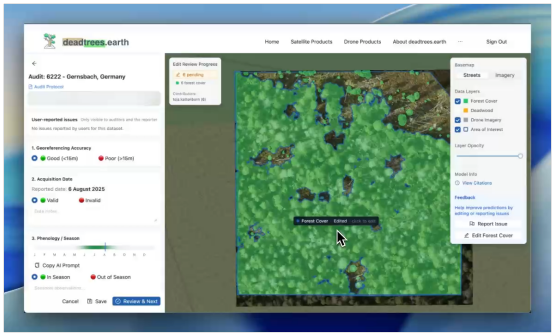
| | | Deadwood annotation via deadtrees.earth incorporated core functionalities developed in the Pilot project GeoLabel
| GeoLabel is developing a WebGIS platform for collaborative geospatial data labeling to support AI applications. It addresses current challenges in usability, scalability, and standardization of annotation workflows.
Core functionalities have been implemented, including browser-based annotation, metadata handling, and AI-assisted labeling. The tool was presented at the NFDI4Earth plenary and is already in practical use, for example, on deadtrees.earth. Further development is ongoing, with plans to integrate GeoLabel as part of a Lighthouse Use Case project in the continuation phase of NFDI4Earth.
Janusch Jehle & Teja Kattenborn (University of Freiburg)
|
| VISQAM – visual question - answering for thematic maps
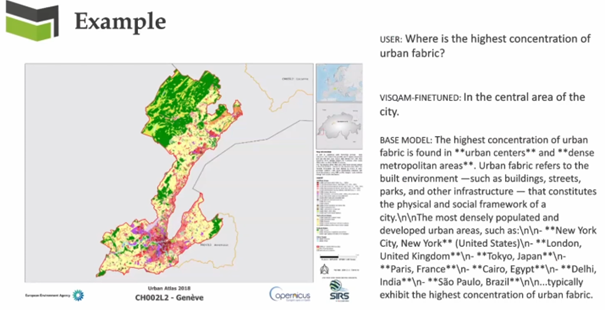
| | An example use case asking a question about the map on the left side.
| The VISQAM incubator project aims to improve the accessibility and interpretation of thematic maps visual question-answering (VQA). Since maps require complex reasoning to extract information, VISQAM enables AI-based, prompt-driven interaction to support users in understanding geospatial content more efficiently.
A central outcome is an open dataset of thematic maps annotated with question–answer pairs. The current version includes 800 images and over 3,000 annotations, enriched with structured information such as legend bounding boxes. The dataset is built through a systematic workflow including data collection, definition of question types, and detailed annotation of map elements (e.g., legends and scale bars).
In addition, a baseline VQA model was developed by fine-tuning a vision-language model (Qwen3-VL-2B-Instruct). The fine-tuned model shows clear performance improvements over the base model, demonstrating the value of domain-specific training for map understanding.
All resources, including dataset, model, and Jupyter Notebook-based workflows, are openly available via GitLab, following FAIR principles. VISQAM thus provides a foundation for future research and applications, such as improved accessibility of geospatial information and integration into NFDI4Earth services.
Eftychia Koukouraki (University of Münster)
|
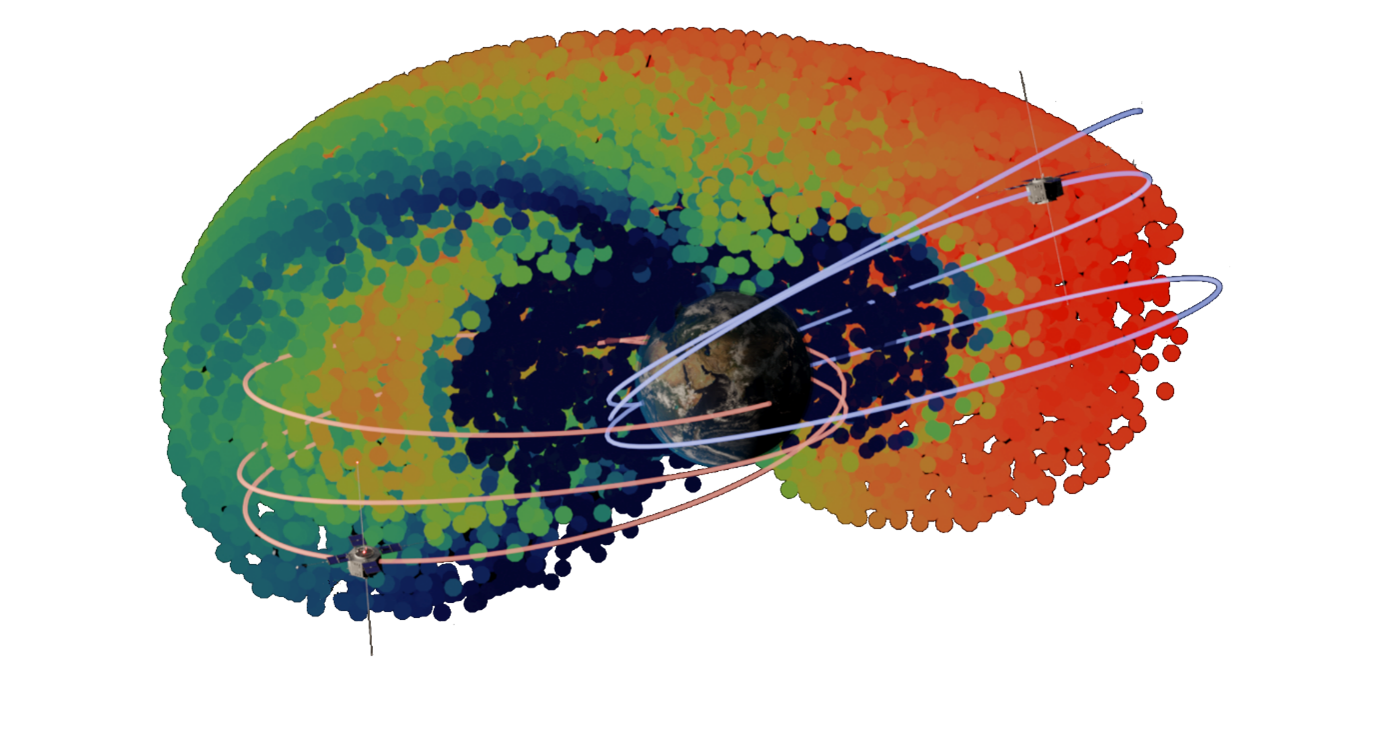
| EL-PASO - elaborative particle analysis from satellite observation | | Particles in the magnetosphere
| The EL-PASO incubator project aims to improve the reproducibility and accessibility of satellite-based particle measurements in Earth’s magnetosphere. Although such data are widely available, they require complex and often inconsistent preprocessing, such as time binning, pitch angle calculations, and transformation to phase space density, making results difficult to reproduce across research groups.
To address this, EL-PASO is developing an open, user-friendly Python package that standardizes the processing workflow. The package integrates common analysis steps, supports multiple input formats (e.g., CDF, NetCDF, HDF5), and ensures traceability by storing metadata alongside processed data. It also enables standardized output formats, facilitating data sharing and reuse.
The project builds on existing research code and refactors it into a modular, well-documented framework aligned with current data standards (e.g., PRBEM, MISO). It further extends the functionality to support different magnetic field models and provides Jupyter notebook-based tutorials for widely used satellite missions. This ensures usability for both experienced researchers and newcomers.
All components, including code, documentation, and tutorials, are openly released via GitLab. EL-PASO thus establishes a foundation for reproducible space physics research and contributes to standardized data processing within the NFDI4Earth ecosystem.
Bernhard Haas (GFZ Potsdam)
|
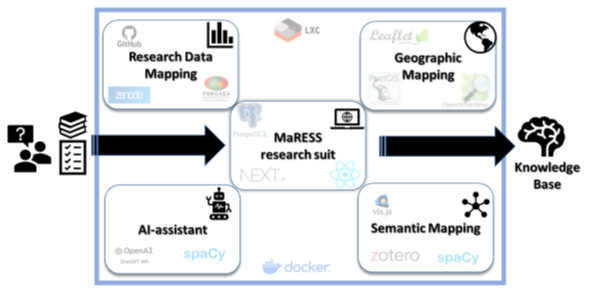
| MARESS – Mapping research in ESS | | MaRESS modular architecture integrating four core modules
| The MaRESS incubator project is developing a modern web application to support the spatial analysis of scientific literature in Earth System Sciences (ESS). A key challenge in this domain is that geographic information about study sites is often embedded in text and not available in structured, machine-readable formats, limiting large-scale spatial analyses and the identification of research gaps.
MaRESS addresses this by combining interactive geographic mapping with AI-based information extraction. The system automatically processes scientific publications by integrating data from sources such as Zotero and uses natural language processing (NLP) to identify geographic entities, extract coordinates, and link them to publications. This enables the visualization of research locations on interactive maps, alongside advanced filtering, metadata exploration, and citation network analysis.
The application follows a modular architecture consisting of four main components: geographic mapping, semantic mapping, research data integration, and an AI-assisted categorization module. Built using modern web technologies (e.g., Vue.js, FastAPI, PostgreSQL/PostGIS), MaRESS supports scalable, reproducible, and containerized deployment. All components are designed according to FAIR and open science principles. Further information can be found in the GitLab repository.
By linking bibliographic, spatial, and semantic information, MaRESS enables researchers to identify geographic knowledge gaps, analyze research trends, and build structured knowledge bases. The project thus contributes to improved data accessibility and advanced research data management within the NFDI4Earth ecosystem.
Marco Otto & Benjamin Schmidt (TU Berlin)
| |
| |
|
|---|
NFDI4Earth Helpdesk: Question of the Quarter |
| |
|---|
The User Support Network Helpdesk answers the questions we receive in the internal ticket system. To give you an impression of our work, we will regularly present some of our tasks here.
Topic: nf-co2footprint plugin; Data format for emission reporting
Question/Issue: The Quantitative Biology Center (QBiC) at the University of Tübingen is currently heading the development of the plugin and has encountered a reporting issue related to the development of the nf-co2footprint plugin. The plugin estimates CO₂ emissions from Nextflow pipelines during runtime, with the aim of providing a comprehensive and FAIR emission reporting with minimal effort for the end user. The working group would like to create a machine-readable output file for emissions and the associated metrics from which they are derived. Research into existing file formats and machine-readable protocols for reporting of emission has not resulted in a prevailing community standard.
The group has found several reporting formats that cannot fully meet the needs: Answer: Stefan Kern from the University of Hamburg, as the member of the user support team, addresses this issue. He is an expert in satellite remote sensing and has experience in how Earth System Sciences data is shared according to the FAIR principles.
His answer was therefore, that he was neither familiar with the respective machine-readable protocols nor involved in the file-formats and standards that might have been used by the GHG/emissions community. His recommendation was to store data in the machine-readable format netCDF file (across platforms and operating systems), that allows FAIR data handling. This is a powerful format used within the Earth System Science community for all kinds of observational data. More information about this format can be found in the "standard-name" table. The "atmospheric chemistry" section in CF Standard Names includes a number of quantities, along with how they should be named and the proper units. The documentation should help in creating netCDF files.
Ines Langer (Freie Universität Berlin)
| |
|
|---|
NFDI4Earth at SLUB Dresden for Love Data Week 2026
| During Love Data Week, the Come2Data project hosted a series of talks and workshops in the Open Science Lab of SLUB Dresden to promote topics in research data management. We contributed to a workshop “Data Makes the Earth Go Round: Finding and Sharing Environmental, Climate, and Urban Data”, where we presented the central services developed by NFDI4Earth. Using urban climate and heat adaptation as an example, participants learned about relevant data sources and gained insights into common challenges related to data discovery, access, and use. |
| |
|---|
In the hands-on session that followed, the participants, having their own workflows and research data management challenges in mind, explored the OneStop4All portal as the central access point to the NFDI4Earth services. Learning about user perspectives beyond the Earth System Sciences report is available in Zenodo.
Anna Brauer & Astrid Ziemann (TU Dresden) | | Reaching out to scientists from CDRmare
| As part of the General Assembly of the Research Mission "Marine Carbon Sinks in Decarbonisation Pathways" (CDRmare), over 100 scientists from Germany's leading marine research institutions are investigating and assessing methods of marine Carbon Dioxide Removal (CDR) under the umbrella of the German Marine Research Alliance (DAM).
Research Data Management (RDM) was an essential part of the meeting program and included the supporting RDM services of the NFDI4Earth with particular emphasis on the OneStop4All, the User Support Network, the Knowledge Hub and the EduTrain Portal. All participats could get answers to their RDM-related questions in personal conversations and via posters throughout the entire conference period.
Through this direct contact with the marine science community, NFDI4Earth aims to increase recognition and utilisation of its provided services and gain insights into the practical needs of individual research communities.
Manja Placke (IOW Rostock)
| | | | | | NFDI4Earth at 86th Annual Meeting of the DGG
| | NFDI4Earth booth at the annual meeting 2026 of the DGG. Photo credit: Ira Gerloff (LIAG Hannover)
| NFDI4Earth was represented with a booth on site at this year's 86th Annual Meeting of the German Geophysical Society (DGG) at the beginning of March at the University of Münster attracting 400 participants to demonstrate the importance of strong data networking within the Geosciences community.
The need for structured, sustainable data infrastructure is clearly visible from the interest shown in the services offered by NFDI4Earth. The main target groups were, on the one hand, students and PhD candidates – i.e. early-career researchers (ECRs), who showed an interest in OneStop4All and the EduPortal – and, on the other hand, the professional association itself, which would like to secure NFDI4Earth as an exhibitor again in 2027 and expressed an interest in a separate presentation and a special session.
Ira Gerloff (LIAG Hannover)
| |
|
|---|
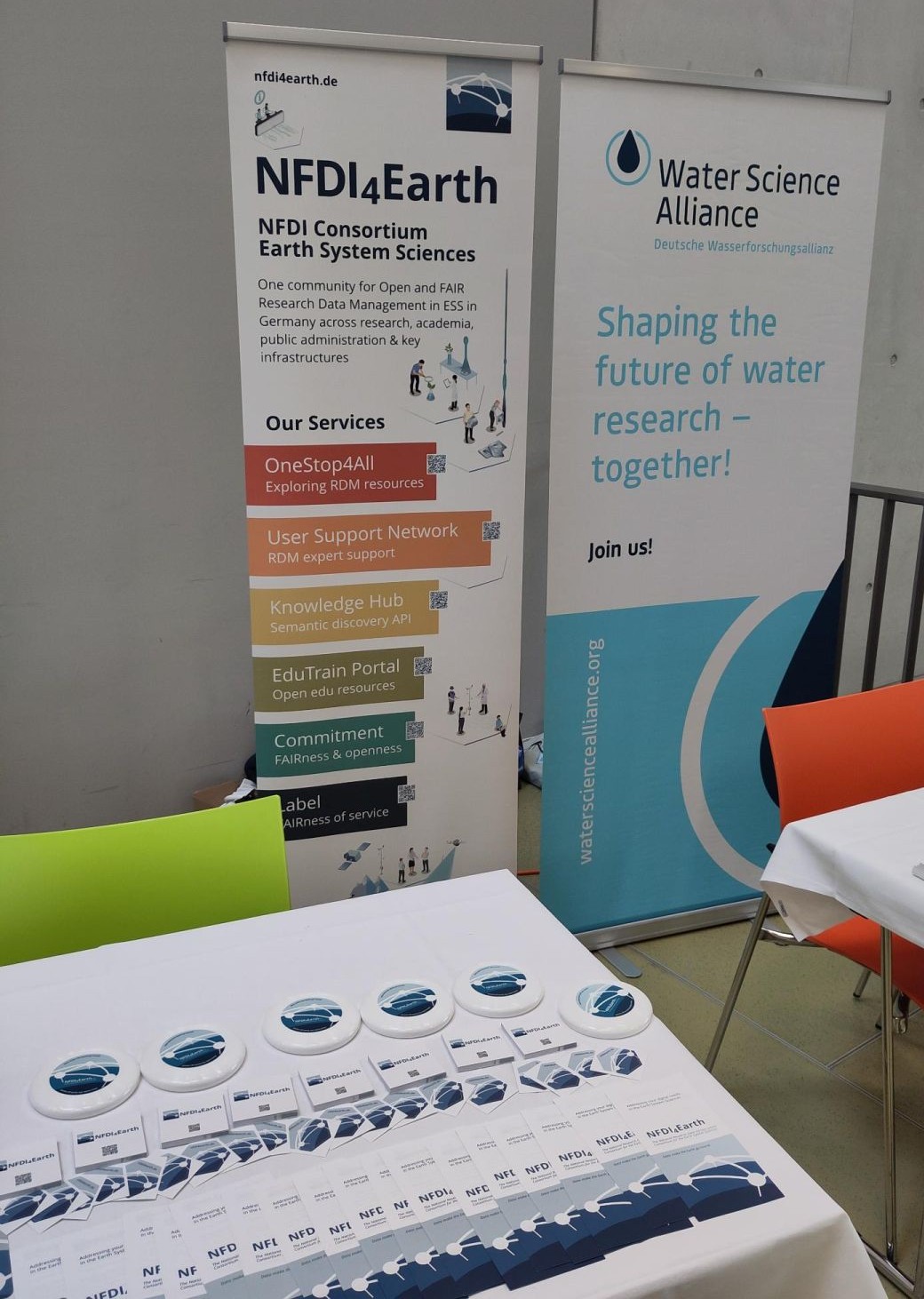
| Boothes of NFDI4Earth and Water Science Alliance at hydrology Day 2026. Photo credit: Jörg Seegert (TU Dresden) |
| NFDI4Earth @ Hydrology Day | NFDI4Earth joined the German Hydrology Day 2026 at the beginning of March at the University of Kassel with about 270 participants representing a well-established and open-minded community.
The NFDI4Earth booth was right next to the Water Science Alliance - a participant of NFDI4Earth and, as such, a suitable channel for promoting NFDI4Earth’s services to the hydrological community to advance water research data management.
In her keynote speech on the tension of water quantity and quality, Martina Flörke, a board member of the Water Science Alliance, highlighted the need for the efficient management of research data.
The interested target groups are similar to those of the DGG: ECRs and decision-makers or representatives of professional associations, as well as senior scientists, who act as key points of contact for linking and supporting major research consortia.
Jörg Seegert (TU Dresden)
|
|
|---|
| NFDI4Earth at EPOS Days 2026 | |
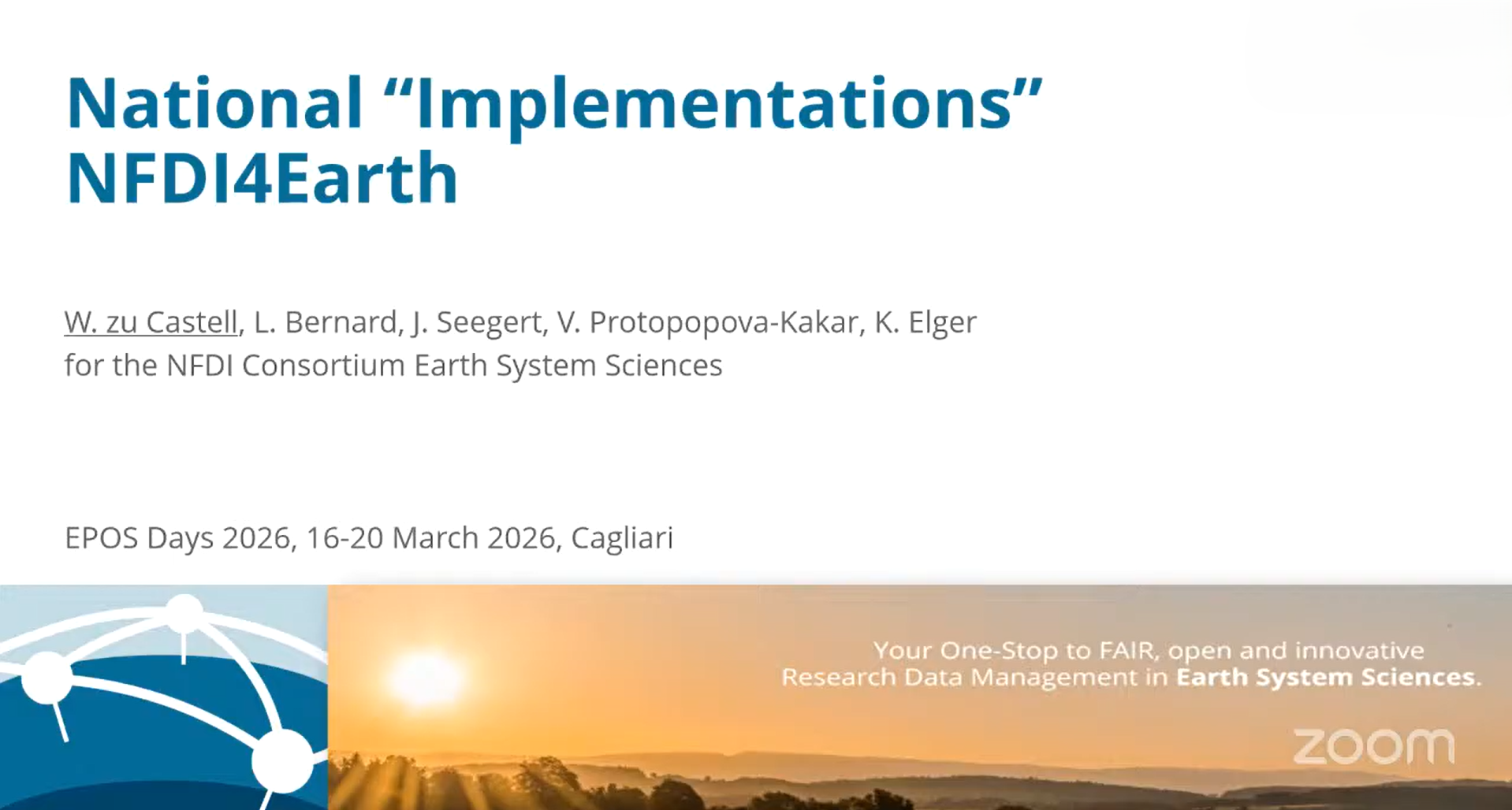
NFDI4Earth participated in the European Plate Observing System (EPOS) Days 2026. Wolfgang zu Castell, co-spokesperson of NFDI4Earth, presented the German Research Data Infrastructure for Earth System Sciences and outlined the pathway toward OneNFDI and the European Open Science Cloud (EOSC).
The German EPOS community was strongly represented by colleagues leading or co-leading Thematic Core Services (TCS) within EPOS and involved in representing new communities: - Kirsten Elger (GFZ Potsdam) presented the TCS Multi-Scale Laboratories (MSL) - status quo and future plans towards providing FAIR data, data products and services on rock properties and processes and enabling transnational access to state-of-the-art research laboratory facilities.
- Angelo Strollo (GFZ Potsdam) highlighted advancements in Seismology TCS, including the scaling of global data services, integration of new technologies, and progress toward AI-ready, decision-support datasets.
- Andrey Babeyko (GFZ Potsdam) presented updates from the Tsunami TCS, featuring new modelling workflows, HPC-supported simulations, and cross-TCS collaboration on multi-risk approaches.
- Marthe Klocking (University of Münster) presented the European and global data landscape in Geo-chemistry and possible avenues for integration between EPOS and the OneGeochemistry initiative.
All presentations and videos are available on the official event web page.
Valentina Protopopova-Kakar (GFZ Potsdam)
|
|
|---|
|
| News from the RDM & Earth System Science Community | ELMO: Simplifying FAIR metadata creation in geosciences
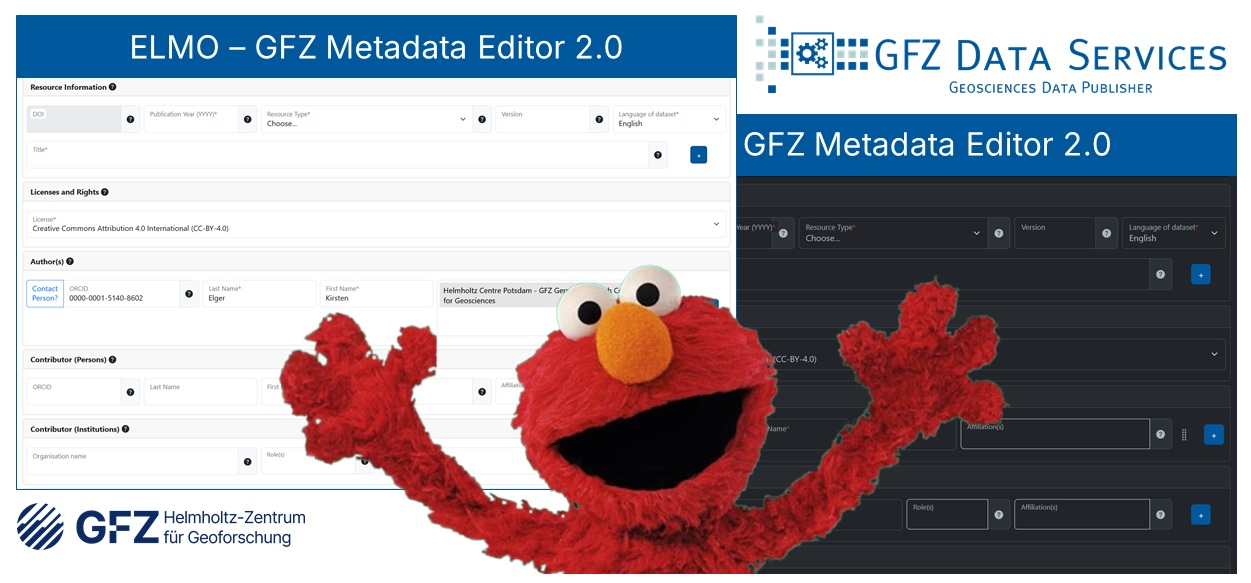
| | ELMO - GFZ Metadata Editor 2.0 | Welcome to ELMO (Enhanced Laboratory Metadata Organiser), our new metadata editor! In November 2025, the GFZ Data Services team proudly launched a fully revised, modernised version of their web-based metadata editor. ELMO offers a new interface and reworked functionalities that enhance the quality and FAIRness of metadata, while also simplifying the submission process for researchers. It conceals technical complexity behind an intuitive online form and automatically generates valid, DataCite-compliant metadata.
For the NFDI4Earth community, ELMO demonstrates how smart PID integration and form-based data entry can make the FAIR principles part of everyday research practice. Accessible online and already in productive use at GFZ Data Services, ELMO continues to evolve through a user-centred design approach. The development team is continuously refining the tool to make metadata entry as straightforward and efficient as possible for all researchers, and welcomes any feedback from the community. A feedback form can be accessed directly in ELMO via the button at the bottom of the input form.
Tatjana Antipanova, Holger Ehrmann, & Kirsten Elger (GFZ Potsdam)
|
|
|---|
|
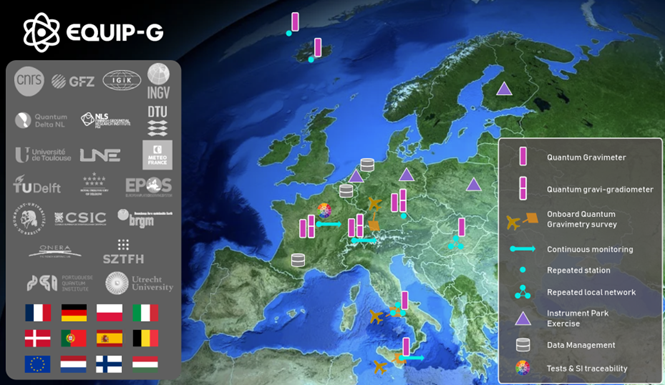
| | EQUIP-G: European Quantum Infrastructure Project for Gravimetry (workshop & open-call) | | Facilities of EQUIP-G Project partners in Europe |
EQUIP-G works towards establishing a European perennial Research Infrastructure to manage a shared park of quantum gravimeters for the benefit and the sovereignty of Europe. Within EQUIP-G, we train new operators, acquire new quantum sensors, test them, and deploy them in the field to tackle use cases ranging from water resources to geothermal energy monitoring. EQUIP-G makes collected data broadly available and shapes a European gravimetric community.
Interested parties are invited to participate in the design of the future entity. We are seeking comments, participation, and contributions from the communities involved via two upcoming activities: an EU-wide community workshop and an open call to use a quantum gravimeter.
The EU wide workshop takes place from 3-5 June 2026 in Potsdam, Germany. It is meant to connect the community and provide room for exchange and discussion. More information and the preliminary program can be found in the Registration link (deadline: May 10th 2026). Registration is free of charge but mandatory. There is no hybrid option.
The second activity offered to the community is an open call for using a quantum gravimeter.
Non-project members or institutions from Europe can apply for using one of our project’s quantum gravimeters for a limited time in their own project – free of charge. This call also includes hands-on training on the instrument prior to usage. Find more detailed information, requirements, and the application procedure on the project website (deadline: July 31st 2026).
We look forward to your engagement, feedback, and fostering our community!
Marvin Reich (GFZ Potsdam, Germany)
Sebastien Merlet & Jean Lautier-Gaud (LNE-OP/Laboratoire Temps Espace, Observatoire de Paris, Université PSL, Sorbonne Université, Université de Lille, CNRS, France)
| |
|
|---|
| | The NFDI4Earth project has been funded by the German Research Foundation (DFG) through the project NFDI4Earth (DFG project no. 460036893, https://nfdi4earth.de/) within the German National Research Data Infrastructure (NFDI, https://www.nfdi.de/). |
|
|---|
| NFDI Consortium Earth System Sciences | https://nfdi4earth.de
edited by: Valentina Protopopova-Kakar (GFZ Helmholtz Centre for Geosciences) & NFDI4Earth Coordination Office (TUD Dresden University of Technology)
Report news to: nfdi4earth-news@tu-dresden.de | |
|
|---|
|
|